
Hernia Surgery Idaho Falls: Warning Signs to Know

Warning Signs You May Have a Hernia (And When to See a Surgeon in Idaho Falls)
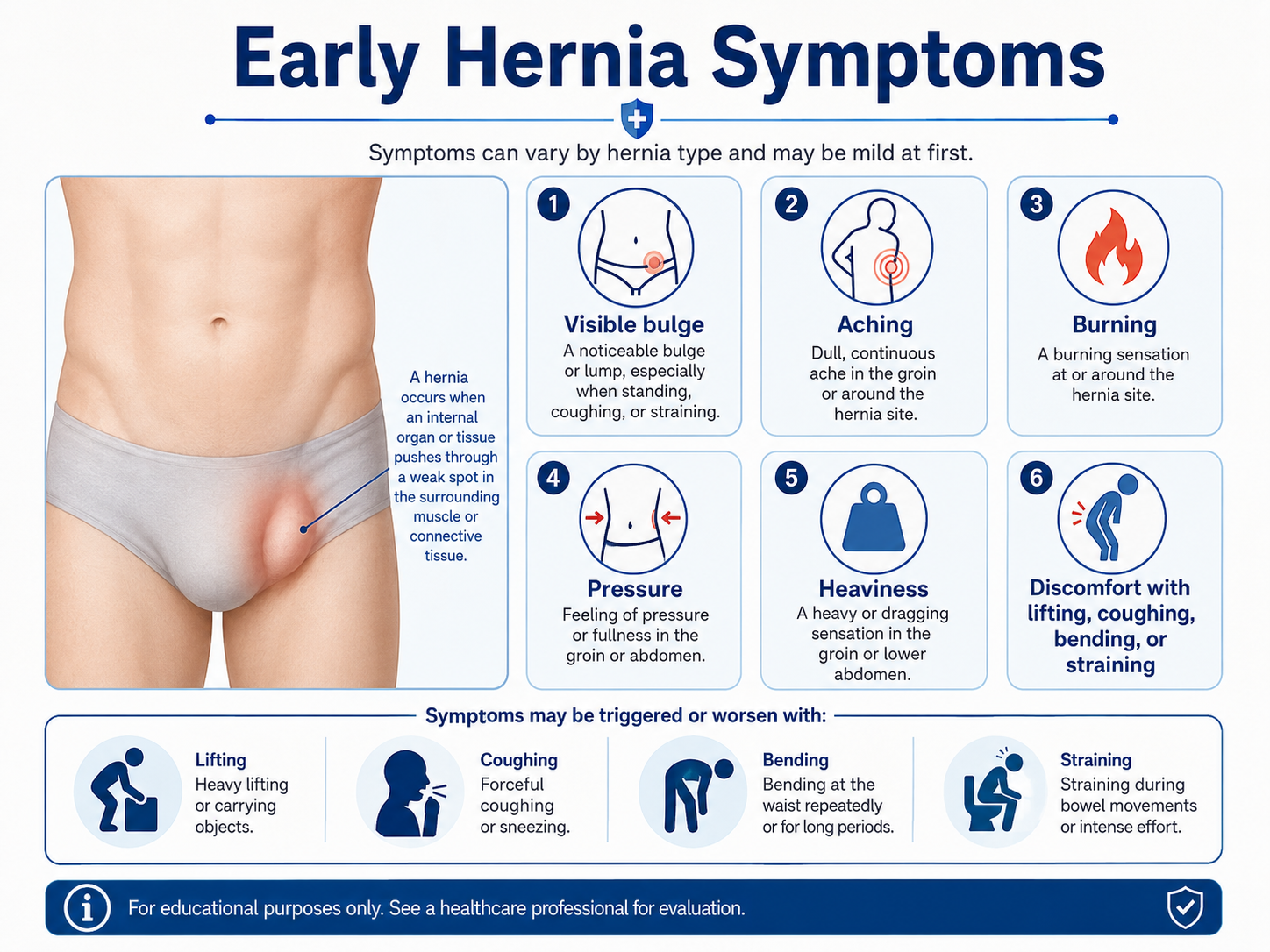
Common warning signs of a hernia include a new bulge in the abdomen or groin, pressure, aching, burning, or discomfort that worsens when you cough, bend, lift, or strain. Some hernias do not produce a visible lump. Sudden severe pain, vomiting, fever, or discoloration may require emergency care.
Because these symptoms can resemble a pulled muscle, digestive problem, or another condition, they cannot confirm a diagnosis by themselves. For people researching hernia surgery Idaho Falls options, a surgical consultation can determine whether a hernia is present and whether monitoring or repair may be appropriate.
What Is a Hernia?
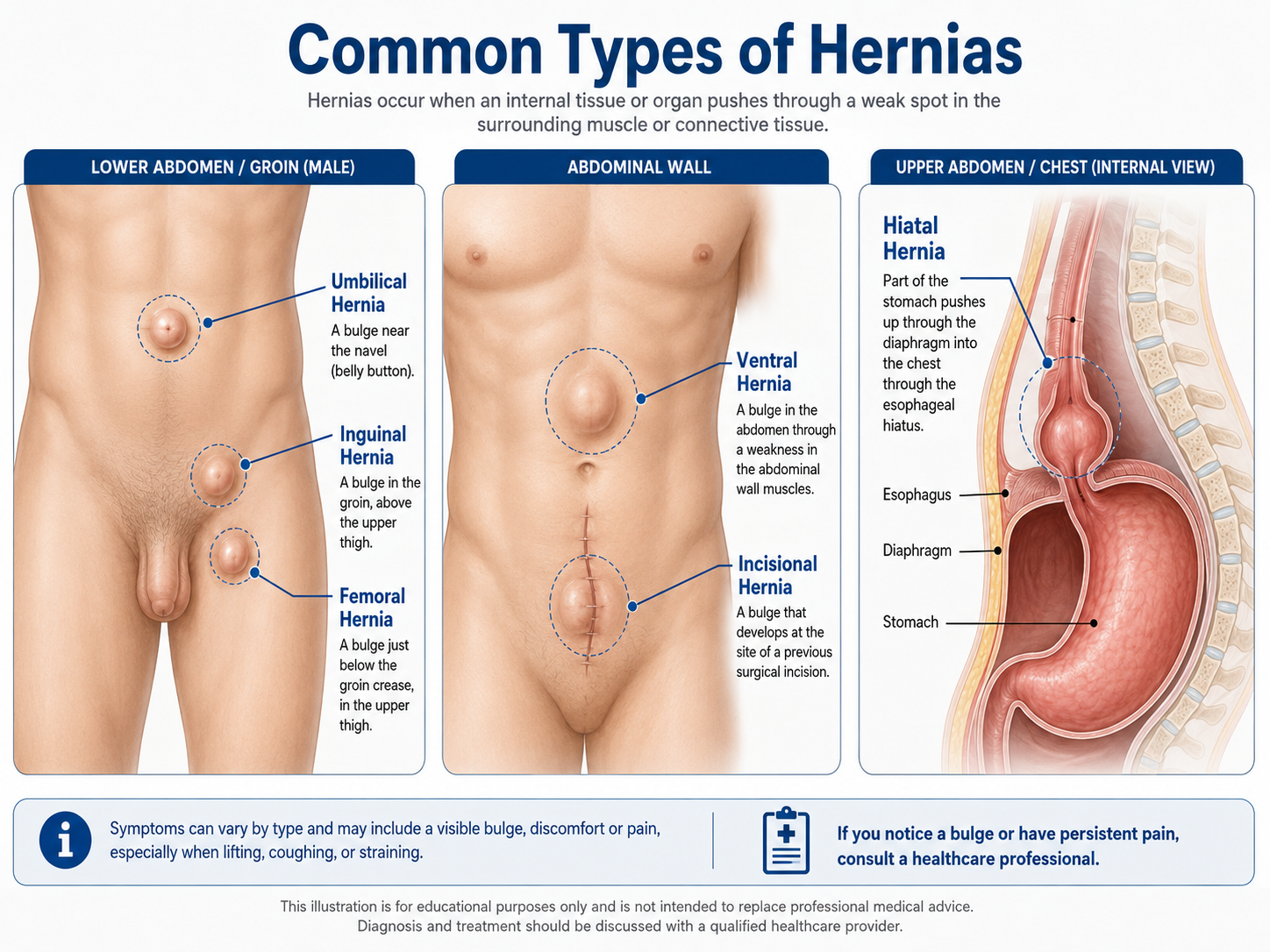
A hernia develops when tissue pushes through a weakened area of muscle or connective tissue. Many form in the abdominal wall or groin. Some create a noticeable bulge, while others cause only pressure, heaviness, aching, or discomfort.
A hiatal hernia is different. It occurs internally when part of the stomach moves through an opening in the diaphragm, so it usually does not create an external lump.
Common Types of Hernias
Inguinal and Femoral Hernias
An inguinal hernia develops in the groin and may cause a bulge, burning, heaviness, or pain during standing, coughing, or lifting. A femoral hernia appears near the upper thigh or groin and may be less noticeable. Both should be professionally evaluated.
Umbilical, Ventral, and Incisional Hernias
An umbilical hernia forms around the belly button. A ventral hernia develops through the abdominal wall, while an incisional hernia occurs near a previous surgical incision. These hernias may cause swelling, pressure, or localized discomfort.
Hiatal Hernias
Possible hiatal hernia symptoms include heartburn, regurgitation, difficulty swallowing, early fullness, or chest and upper abdominal discomfort. The Mayo Clinic’s hiatal hernia overview notes that larger hiatal hernias are more likely to cause symptoms. Reflux does not always mean a hiatal hernia is present.
Seek prompt medical evaluation for unexplained chest pain rather than assuming it is digestive.
What Are the Warning Signs of a Hernia?
A New or Changing Bulge
A hernia may appear as a lump in the groin, abdomen, belly button, or near an old surgical scar. It may be more visible while standing, coughing, or straining. Not every lump is a hernia, so a new or changing bulge should be examined.
Pain, Aching, Burning, or Pressure
Hernia discomfort is not always sharp. It may feel like a dull ache, burning sensation, pressure, pulling, or heaviness around the affected area.
Symptoms That Worsen With Activity
Discomfort may increase during:
Lifting or carrying
Bending or exercising
Coughing or sneezing
Standing for long periods
Straining during a bowel movement
Swelling Near a Previous Incision
A bulge or discomfort around an abdominal surgery scar may indicate an incisional hernia, particularly if it is growing or becoming painful.
Groin or Scrotal Swelling
Some inguinal hernias extend toward the scrotum and cause swelling, aching, or pressure.
Symptoms Without a Visible Bulge
Small or deeply located hernias may not be obvious. Hiatal hernias can cause digestive or swallowing symptoms without an external lump. Persistent unexplained symptoms deserve medical evaluation.
When Is a Hernia an Emergency?
An incarcerated hernia occurs when tissue becomes trapped in the hernia opening. A strangulated hernia occurs when blood flow to that tissue is restricted. Strangulation or bowel obstruction may require emergency surgery.
Seek emergency medical care immediately for:
Sudden or rapidly worsening pain
Severe tenderness at the bulge
Nausea or repeated vomiting
Fever
Abdominal swelling or bloating
Inability to pass stool or gas
A bulge that suddenly becomes larger, firm, or severely painful
Red, purple, dark, or discolored skin over the bulge
A bulge that no longer changes when you lie down
Do not wait for a routine appointment when these symptoms occur. TheNational Institute of Diabetes and Digestive and Kidney Diseases also identifies severe pain, vomiting, fever, and an enlarged or discolored bulge as warning signs requiring prompt care.
When Should You See a Hernia Surgeon?
Consider scheduling an evaluation with ageneral surgeon in Idaho Falls for a new bulge, persistent discomfort, an enlarging hernia, activity limitations, swelling near a previous incision, or changes in a previously diagnosed hernia.
Symptom Level
Non-emergency
Needs prompt attention
Emergency
Examples
Mild pressure or a small, stable bulge
Persistent pain, growth, or activity limitations
Severe pain, vomiting, fever, discoloration, or bowel obstruction symptoms
Recommended Step
Arrange a medical evaluation
Contact a general surgeon
Go to an emergency department
Evaluation is also appropriate when symptoms interfere with work, exercise, sleep, or daily activities, even when no bulge is visible.
How Is a Hernia Diagnosed?
A surgeon will review your symptoms, medical history, previous operations, and activities that affect the discomfort. The examination may be performed while you stand, cough, or gently strain because some hernias become easier to detect when abdominal pressure increases.
Ultrasound, CT imaging, or another test may be recommended when the diagnosis or anatomy is unclear. Not every patient needs imaging.
Does Every Hernia Need Surgery?
Not every hernia requires immediate surgery, but most abdominal wall and groin hernias do not close on their own.
Some small, minimally symptomatic, reducible hernias may be monitored under medical guidance. Watchful waiting is not appropriate for every hernia. Type, size, pain, growth, activity limitations, previous surgery, overall health, and complication risk all affect the recommendation.
Some hiatal hernias may initially be managed with lifestyle changes or medication. Surgery may be considered for significant symptoms, complications, or ineffective non-surgical treatment.
Hernia Surgery Idaho Falls: What Repair Options Are Available?
When repair is recommended, the approach depends on the hernia’s type, size, location, complexity, and the patient’s health and surgical history.
Open Hernia Repair
Open repair uses an incision near the hernia. The surgeon returns the displaced tissue to the appropriate position and reinforces the weakened area.
Laparoscopic Hernia Repair
Laparoscopic repair uses several small incisions and specialized instruments. It may be appropriate for selected patients and hernia types.
Robotic-Assisted Hernia Repair
Robotic-assisted repair also uses small incisions and surgeon-controlled instruments. It may be considered for selected routine or complex cases.
When comparing hernia surgery Idaho Falls providers, remember that no method is automatically best for everyone. The American College of Surgeons provides additional patient information about groin hernia repair.
At Steele Lake Specialty, Dr. James Summers treats multiple hernia types using traditional, minimally invasive, and robotic techniques. Dr. Chance Smith has experience with complex robotic procedures, including hiatal hernia repair and abdominal wall reconstruction.
What to Expect From a Surgical Consultation
During a hernia surgery Idaho Falls consultation, your surgeon may:
Review your symptoms and medical history
Examine the affected area
Review existing scans or recommend imaging
Discuss whether observation or surgery may be reasonable
Explain treatment options, risks, benefits, and recovery considerations
Answer questions about work, lifting, exercise, and daily activity
Recommendations should be individualized.
Talk to a Hernia Surgeon in Idaho Falls
A new bulge, persistent groin pressure, or worsening abdominal discomfort deserves evaluation. An examination can clarify the cause and available options.
For personalized hernia surgery Idaho Falls guidance, call (208) 529-2230 or schedule a hernia evaluation with Steele Lake Specialty. The practice provides surgical care for patients in Idaho Falls and throughout Eastern Idaho.
Frequently Asked Questions About Hernias
What are the first signs of a hernia?
Early signs may include a bulge, pressure, aching, burning, or discomfort in the abdomen or groin. Symptoms may worsen with coughing, lifting, bending, or straining.
Can you have a hernia without a visible bulge?
Yes. Small or deeply located hernias may not create an obvious lump, and hiatal hernias occur inside the body.
What does hernia pain feel like?
It may feel sharp, dull, burning, pulling, heavy, or achy. The sensation alone cannot confirm a hernia.
How can you tell a hernia from a pulled muscle?
The symptoms can overlap. A bulge that changes with coughing, standing, or straining may suggest a hernia, but an examination is needed for an accurate diagnosis.
Can a hernia heal without surgery?
Most abdominal wall and groin hernias do not heal on their own. Some can be monitored under medical supervision, while others require repair.